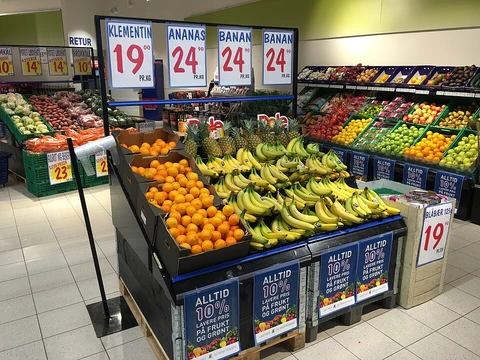
Cooking banana
Starchy banana cultivars used in cooking worldwide.

Apinanaivot · CC0
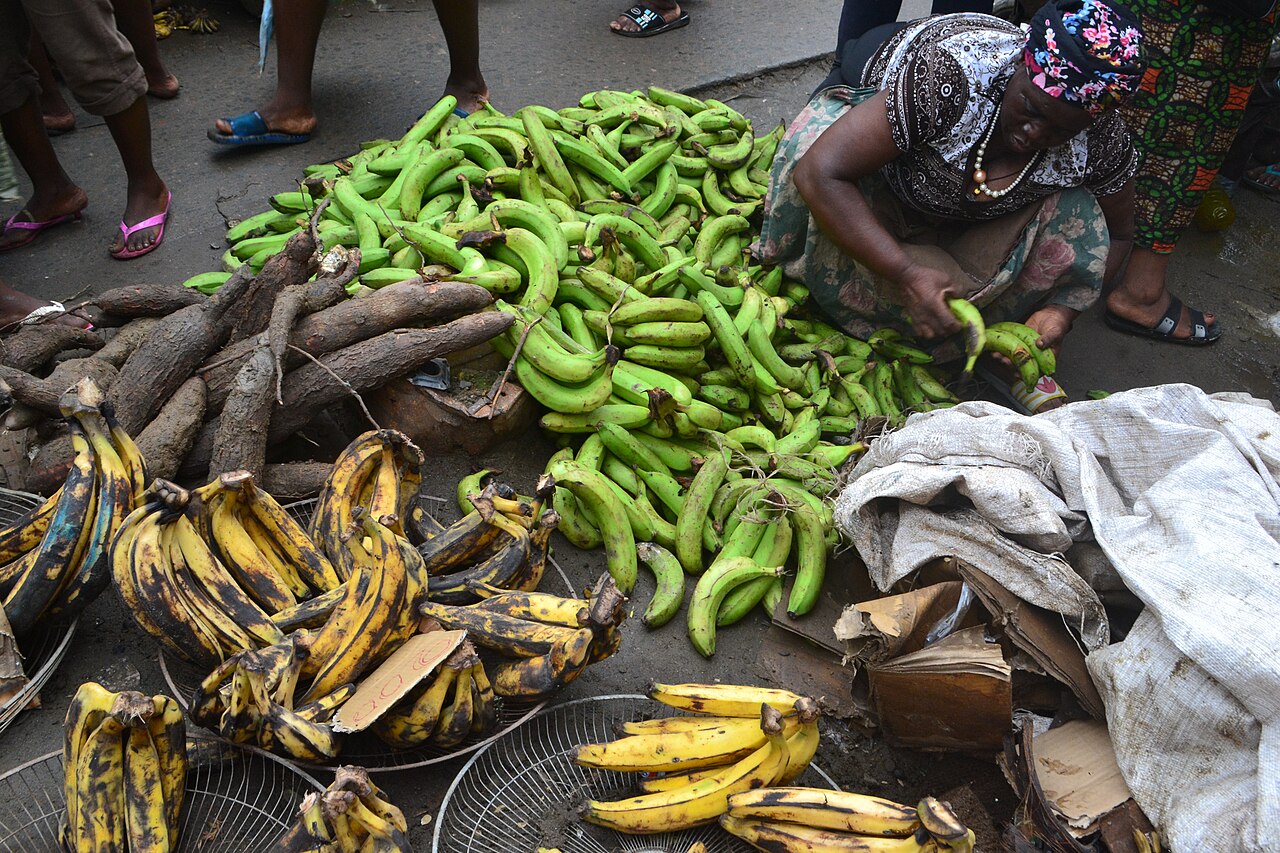
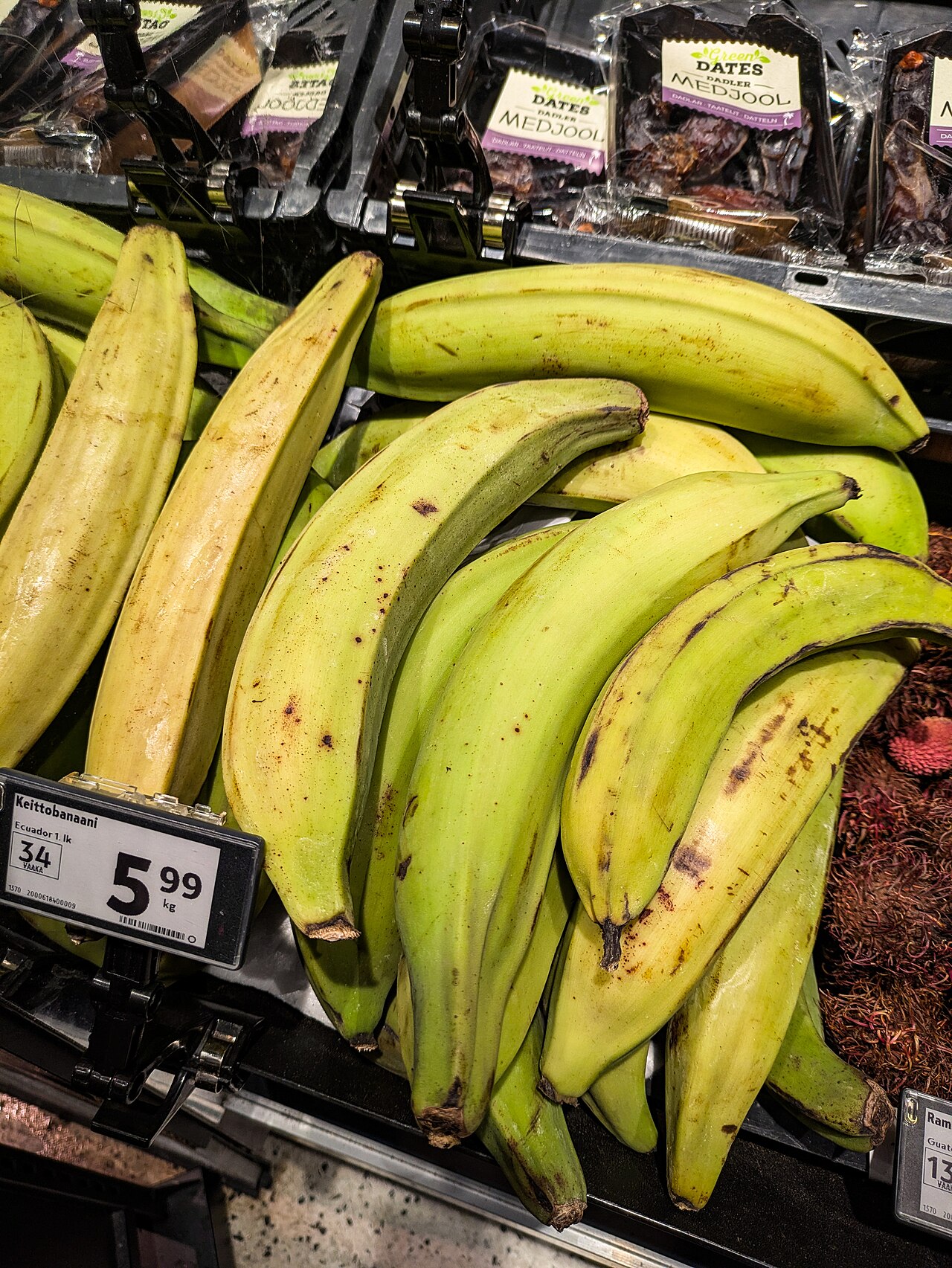
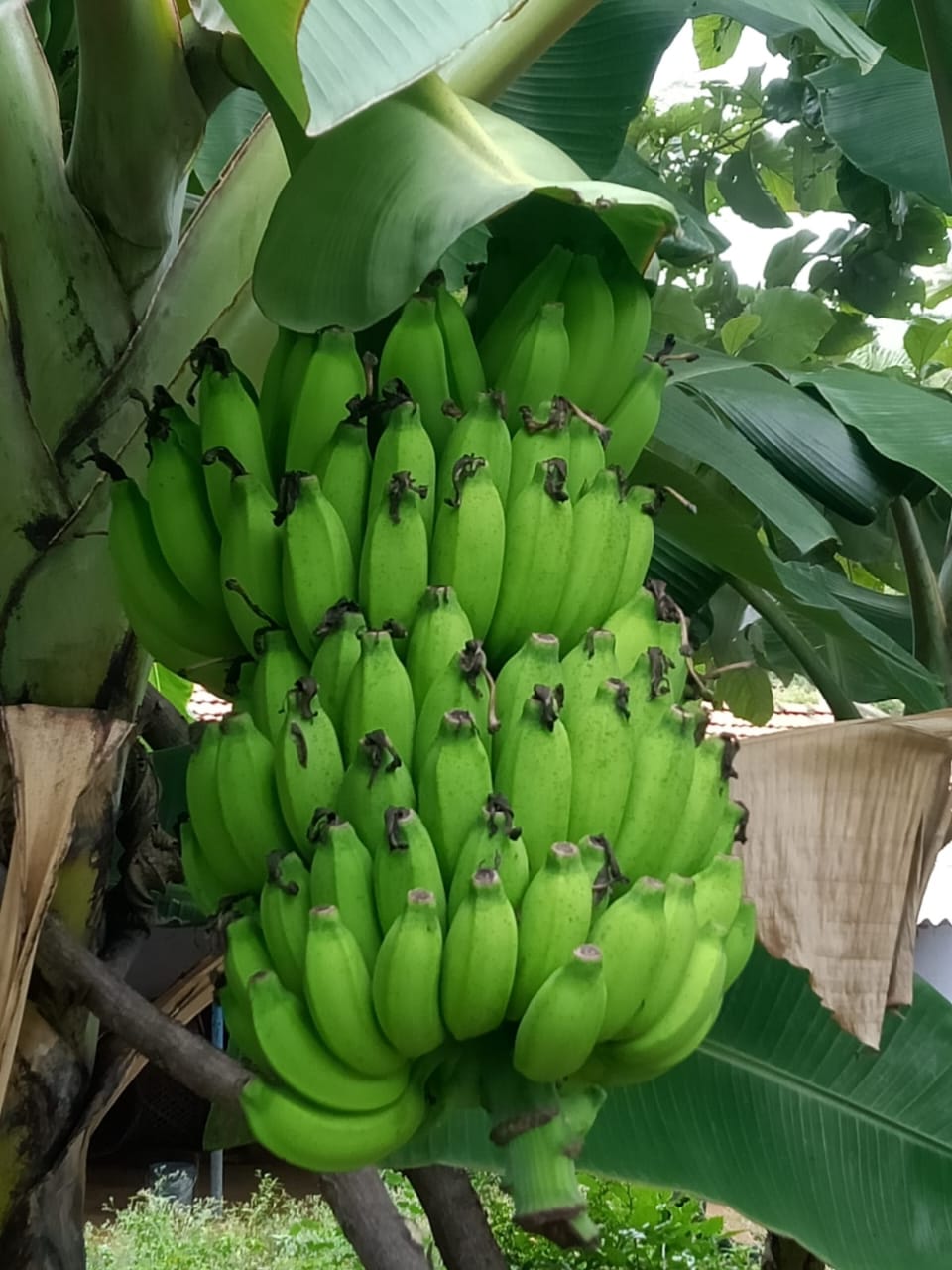
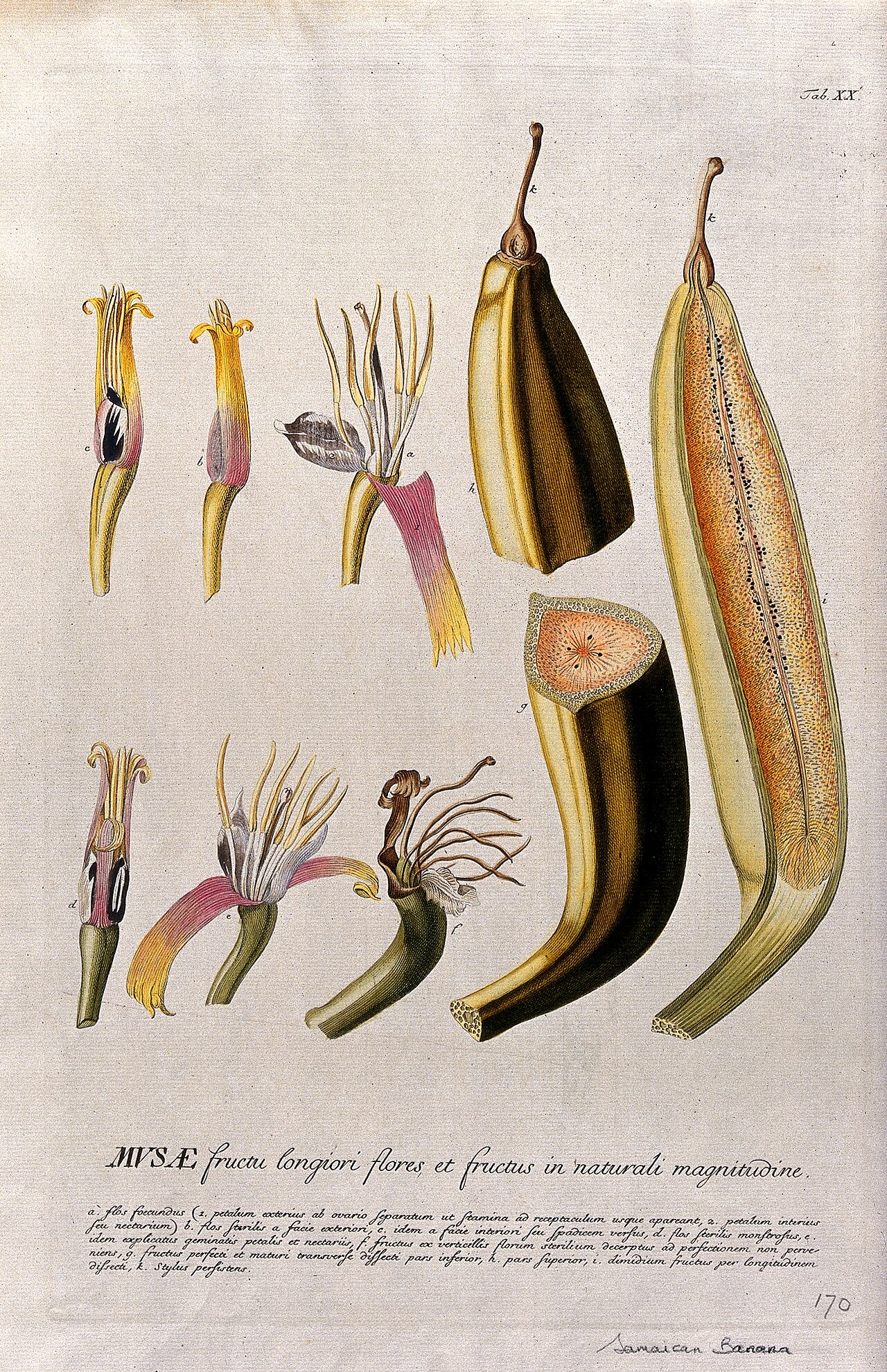
Cooking bananas are a group of banana cultivars in the genus Musa whose fruits are generally used in cooking. They are not eaten raw and are generally starchy. Many cooking bananas are referred to as plantains or green bananas. In botanical usage, the term plantain is used only for true plantains, which are a specific subset of the AAB group (the Plantain subgroup), while other starchy cultivars used for cooking are called cooking bananas. Cooking bananas can belong to the AAB, AAA, ABB, or BBB groups. The currently accepted scientific name for all such cultivars in these groups is Musa × paradisiaca. Fe'i bananas (Musa × troglodytarum) from the Pacific Islands are often eaten roasted or boiled, and are more accurately called Fe'i bananas or Pacific plantains, although they do not belong to any of the species from which all modern banana cultivars are descended. Cooking bananas are a major food staple in West and Central Africa, the Caribbean islands, Central America, and northern South America. Members of the genus Musa are indigenous to the tropical regions of Southeast Asia and Oceania. While bananas can be harvested throughout the year in many regions, individual plants have a specific fruiting cycle (typically 9–12 months), so availability varies by location and cultivar.
- field
- Agriculture and food staple
- known_for
- Starchy fruit used in cooking, major staple in tropical regions
- scientific_name
- Musa × paradisiaca
- genome_groups
- AAB, AAA, ABB, BBB
Lore & Background
Cooking bananas are a group of banana cultivars in the genus Musa whose fruits are generally used in cooking. They are not eaten raw and are generally starchy. Many cooking bananas are referred to as plantains or green bananas. In botanical usage, the term plantain is used only for true plantains, which are a specific subset of the AAB group (the Plantain subgroup), while other starchy cultivars used for cooking are called cooking bananas. Cooking bananas can belong to the AAB, AAA, ABB, or BBB groups. The currently accepted scientific name for all such cultivars in these groups is Musa × paradisiaca. Fe'i bananas (Musa × troglodytarum) from the Pacific Islands are often eaten roasted or boiled, and are more accurately called Fe'i bananas or Pacific plantains, although they do not belong to any of the species from which all modern banana cultivars are descended. Cooking bananas are a major food staple in West and Central Africa, the Caribbean islands, Central America, and northern South America. Members of the genus Musa are indigenous to the tropical regions of Southeast Asia and Oceania. While bananas can be harvested throughout the year in many regions, individual plants have a specific fruiting cycle (typically 9–12 months), so availability varies by location and cultivar.
Reader's Guide
Cooking bananas are a major food staple in West and Central Africa, the Caribbean islands, Central America, and northern South America. They are treated as a starchy fruit with a relatively neutral flavor and soft texture when cooked. Cooking bananas may be eaten raw; however, they are most commonly prepared either fried, boiled, or processed into flour or dough. Plantains have more starch and less sugar compared to regular bananas, which is why they are mostly cooked before eating. They are typically boiled or fried when eaten green, and when processed, they can be made into flour and turned into baked products such as cakes, bread and pancakes. Green plantains can also be boiled and pureed and then used as thickeners for soups. The pulp of green plantain is typically hard, with the peel often so stiff that it must be cut with a knife to be removed. Mature, yellow plantains can be peeled like typical dessert bananas; the pulp is softer than in immature, green fruit and some of the starch has been converted to sugar. They can be eaten raw, but are not as flavorful as dessert bananas, so are usually cooked. When yellow plantains are fried, they tend to caramelize, turning a golden-brown color. They can also be boiled, baked, microwaved, or grilled over charcoal, either peeled or unpeeled. Plantains are a staple food in the tropical regions of the world, ranking as the tenth most important staple food in the world. As a staple, plantains are treated in much the same way as potatoes, with a similar neutral flavor and texture when the unripe fruit is cooked by steaming, boiling, or frying. Since they fruit all year, plantains are a reliable staple food, particularly in developing countries with inadequate food storage, preservation, and transportation technologies. In Africa, plantains and bananas provide more than 25 percent of the caloric requirements for over 70 million people. Plantain plantations are vulnerable to destruction by hurricanes, because Musa spp. do not withstand high winds well. The sap from the fruit peel, as well as the entire plant, can stain clothing and hands, and can be difficult to remove.
Did You Know?
- Cooking bananas are a major food staple in West and Central Africa, the Caribbean islands, Central America, and northern South America.
- The currently accepted scientific name for all cooking banana cultivars is Musa × paradisiaca.
- In Africa, plantains and bananas provide more than 25 percent of the caloric requirements for over 70 million people.
- True plantains are a specific subset of the AAB group, known as the Plantain subgroup, not all AAB cooking cultivars.
Botanical Identity and Ecological Role
In botanical terms, a cooking banana is a fruit — a seed-bearing structure produced by a flowering plant, or angiosperm, that develops from the ovary following the flowering stage. It is not merely a food item but a biological mechanism: fruits represent the primary means by which angiosperms disseminate their seeds into the wider environment. Edible fruits such as bananas have long propagated themselves by hitching a ride on the movements of humans and other animals. This relationship is fundamentally symbiotic; the plant gains a reliable vector for carrying its seeds to new locations, while the animal or human gains a source of nutrition. Humans and numerous other species have grown dependent on fruits as a dietary staple, and as a result, fruits collectively account for a substantial share of global agricultural output. The cooking banana, therefore, sits at the intersection of plant reproductive strategy and human sustenance — a structure shaped by the long-standing partnership between seed-bearing plants and the creatures that eat and carry them.
The Culinary-Botanical Divide
In everyday kitchen language, a cooking banana is grouped with other sweet or sour-tasting produce that people eat raw — alongside apples, grapes, lemons, oranges, and strawberries. The culinary definition of fruit is straightforward: the flavorful, edible output of a particular plant. Botany, however, draws very different boundaries. In the scientific framework, a fruit is a ripened ovary or carpel that contains seeds, a definition that sweeps in structures most people would never call fruit, such as nuts, bean pods, corn kernels, tomatoes, and wheat grains. Conversely, items the kitchen treats as vegetables — cucumbers, pumpkins, squash, beans, peanuts, peas, corn, eggplant, bell peppers, and tomatoes — are all botanically classified as fruits. Even many common spices, including black pepper, chili pepper, cumin, and allspice, are fruits in the strict botanical sense. The cooking banana, while unambiguous in the kitchen, belongs to a much broader botanical category than most people realize.
Internal Architecture of the Fruit
The edible portion of a cooking banana is largely composed of the pericarp, the outer layer of the fruit that is typically formed from the ovary and surrounds the seeds. In most species, this pericarp is differentiated into three distinct concentric layers: the epicarp (the outermost layer), the mesocarp (the middle layer), and the endocarp (the innermost layer). In some fruit species, however, other structural tissues beyond the ovary contribute to or even form the edible portion, complicating a simple ovary-to-fruit narrative. The pericarp may also develop a prominent pointed terminal projection, in which case the fruit is described as beaked. For simple fruits derived from an inferior ovary — one positioned below the attachment point of other floral parts — petals, sepals, and stamens can fuse with the ovary and ripen alongside it, producing what botanists call an accessory fruit. While bananas are not typically accessory fruits, understanding this structural diversity helps explain why the fleshy, edible architecture of a cooking banana is not as uniform across the plant kingdom as it might appear.
From Pollen to Ripe Fruit
The cooking banana's existence begins with pollination — the transfer of pollen grains from the stamens to the stigma-style-ovary system at the center of the flower. Once deposited, a pollen tube grows from the grain through the stigma, down the style, and into the ovary to reach an ovule. Here, a process called double fertilization unfolds: two sperm cells are released from the pollen into the megagametophyte, also known as the embryo sac. One sperm fuses with the egg cell to form a zygote, which will eventually develop into the seed embryo. The second sperm enters the central cell, creating the endosperm mother cell, which gives rise to endosperm — a nutritive tissue that sustains the developing embryo. As the ovules mature into seeds, the ovary wall begins to ripen, and the pericarp develops its characteristic fleshy texture. This entire sequence is tied to meiosis, the cell-division process in which homologous chromosomes replicate, recombine, and segregate to produce haploid cells, ensuring genetic diversity in each new generation of seeds.
Gallery
Frequently Asked Questions
What is a cooking banana?
A cooking banana is a starchy cultivar of the genus Musa whose fruit is meant to be prepared in cooking rather than eaten as a fresh snack. These bananas serve as a major dietary staple across tropical regions worldwide.
What's the difference between a cooking banana and a plantain?
In casual conversation the two terms are often swapped, but botanically 'plantain' applies only to true AAB-group cultivars. 'Cooking banana' is the wider umbrella that also covers AAA, ABB, and BBB genome groups.
Can you eat a cooking banana raw?
Generally no—these bananas are high in starch and low in sugar, so they taste bland and feel mealy when uncooked. They are intended to be boiled, fried, baked, or otherwise cooked before eating.
What is the scientific name for cooking bananas?
The currently accepted binomial is Musa × paradisiaca. Cultivars are further distinguished by their genome group, which falls into the AAB, AAA, ABB, or BBB categories.
More in Edible Fruits & Vegetables 1-24
Elsewhere in the Edible Fruits & Vegetables universe
Spotted an error? Know more?
This is a living reference — every entry is fact-audited, and reader corrections feed straight into our audit queue. Suggest an edit · See this site's audit record