Kabocha
A sweet winter squash of Japanese origin, versatile in cooking.

Ro · CC0
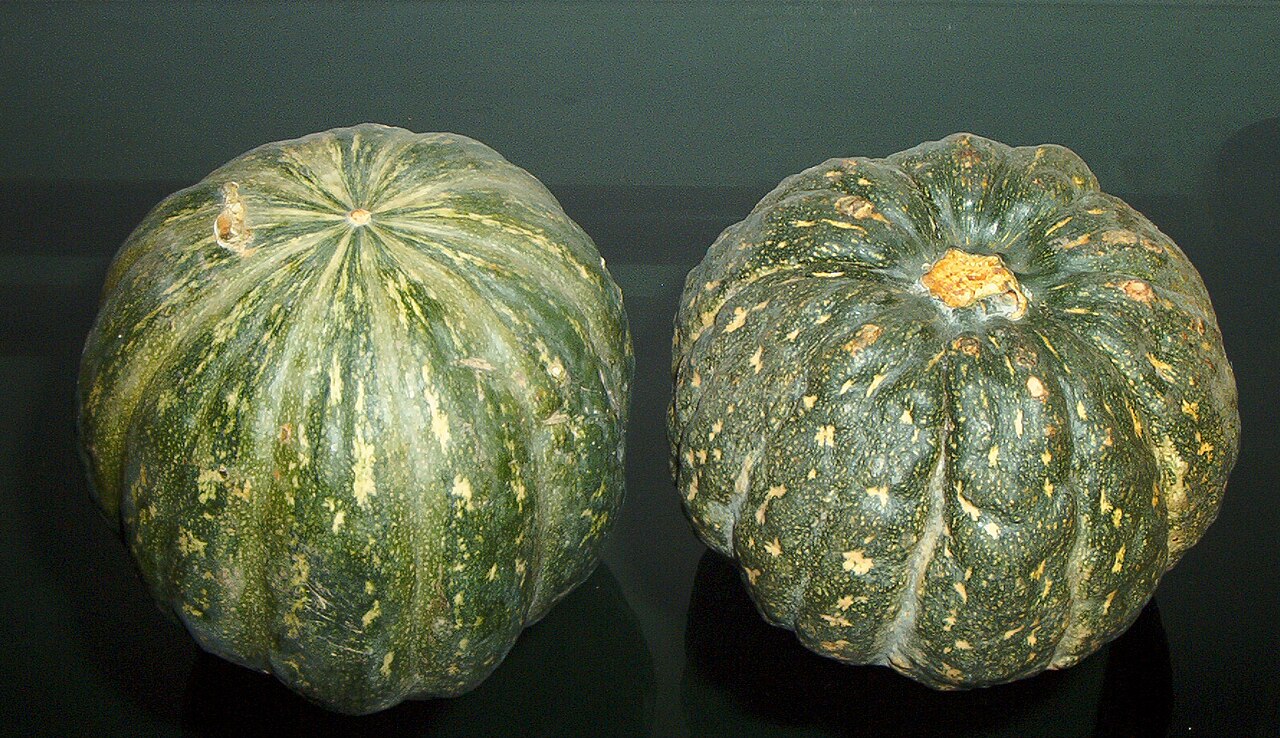
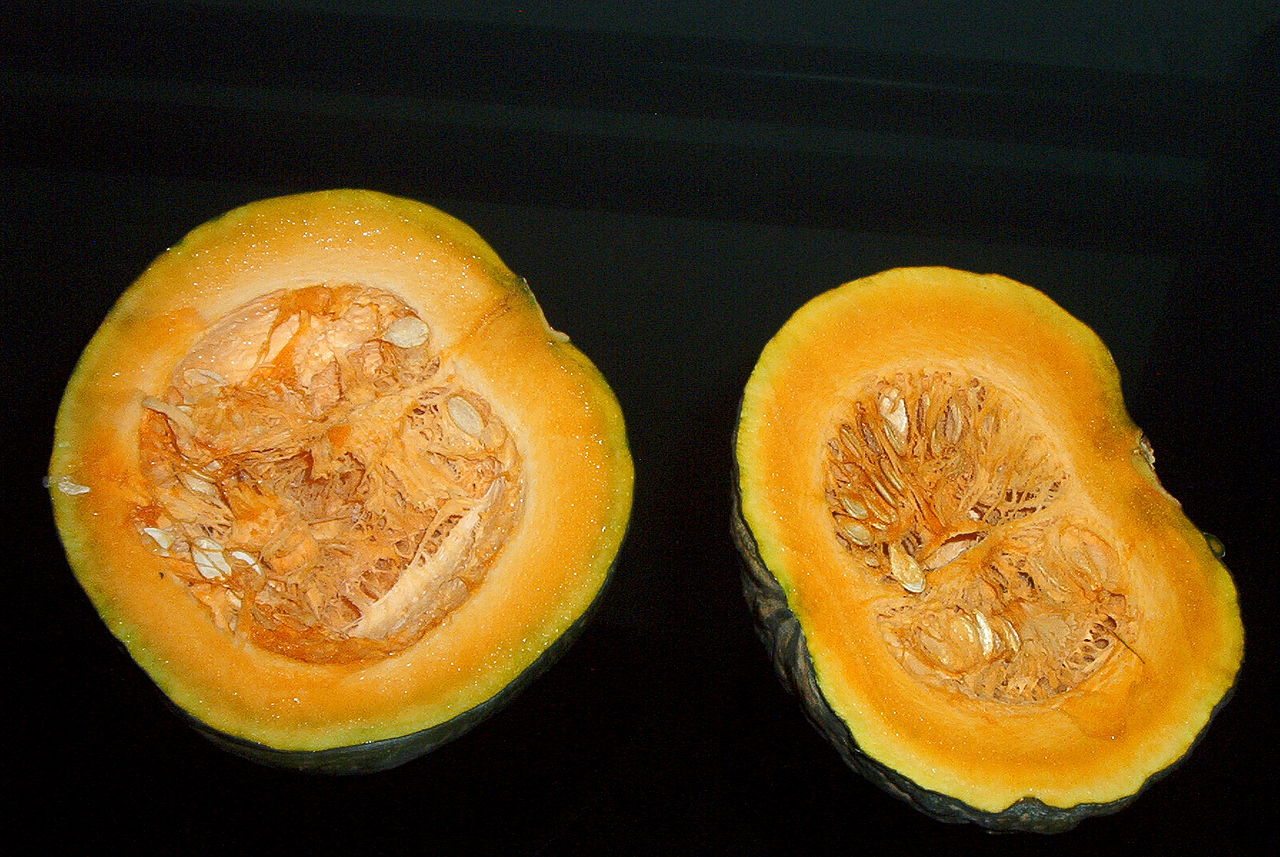
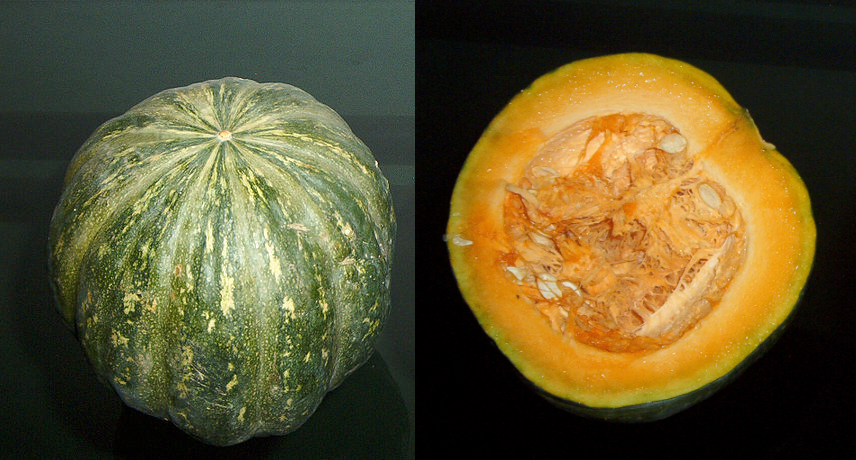
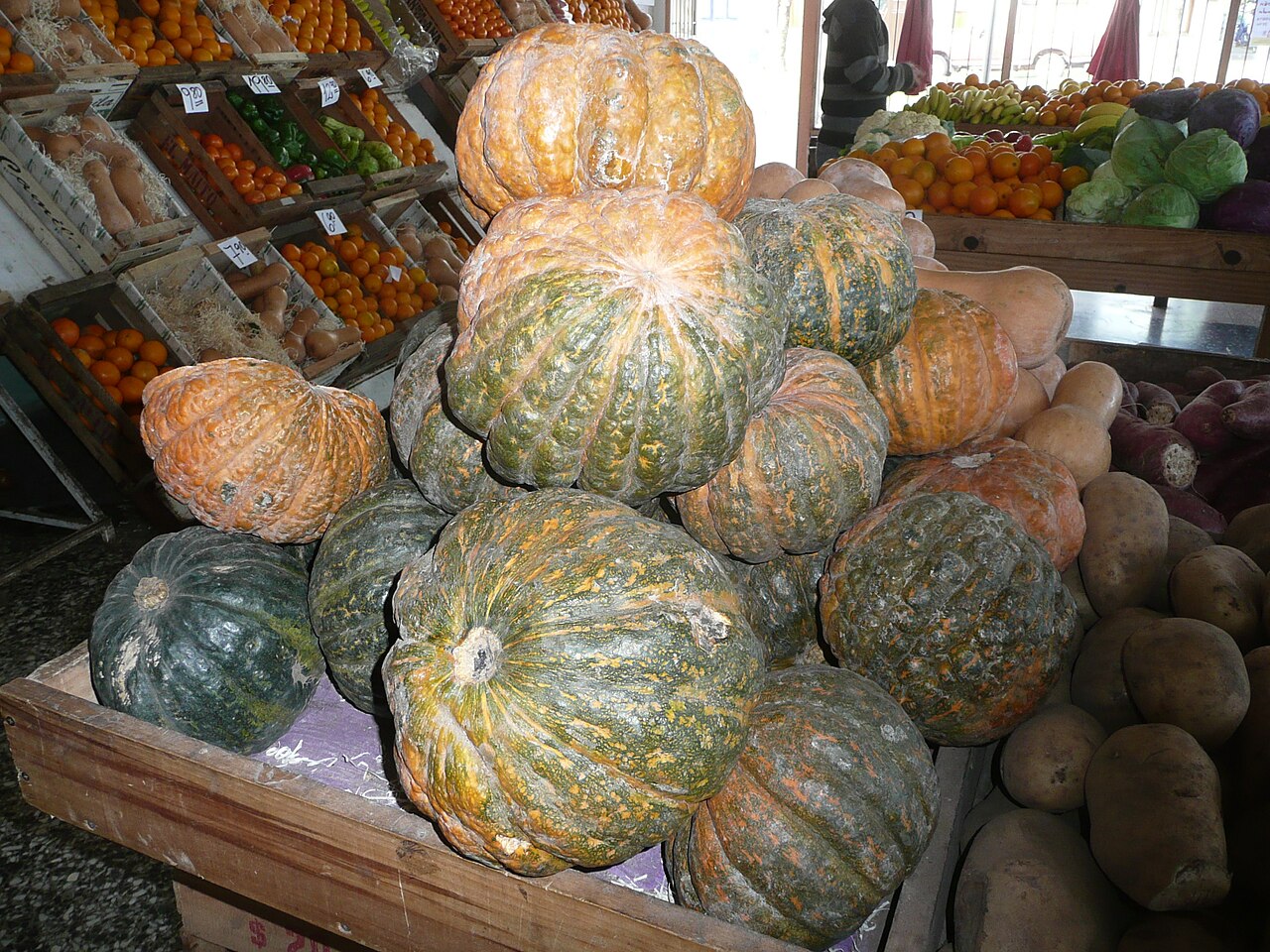
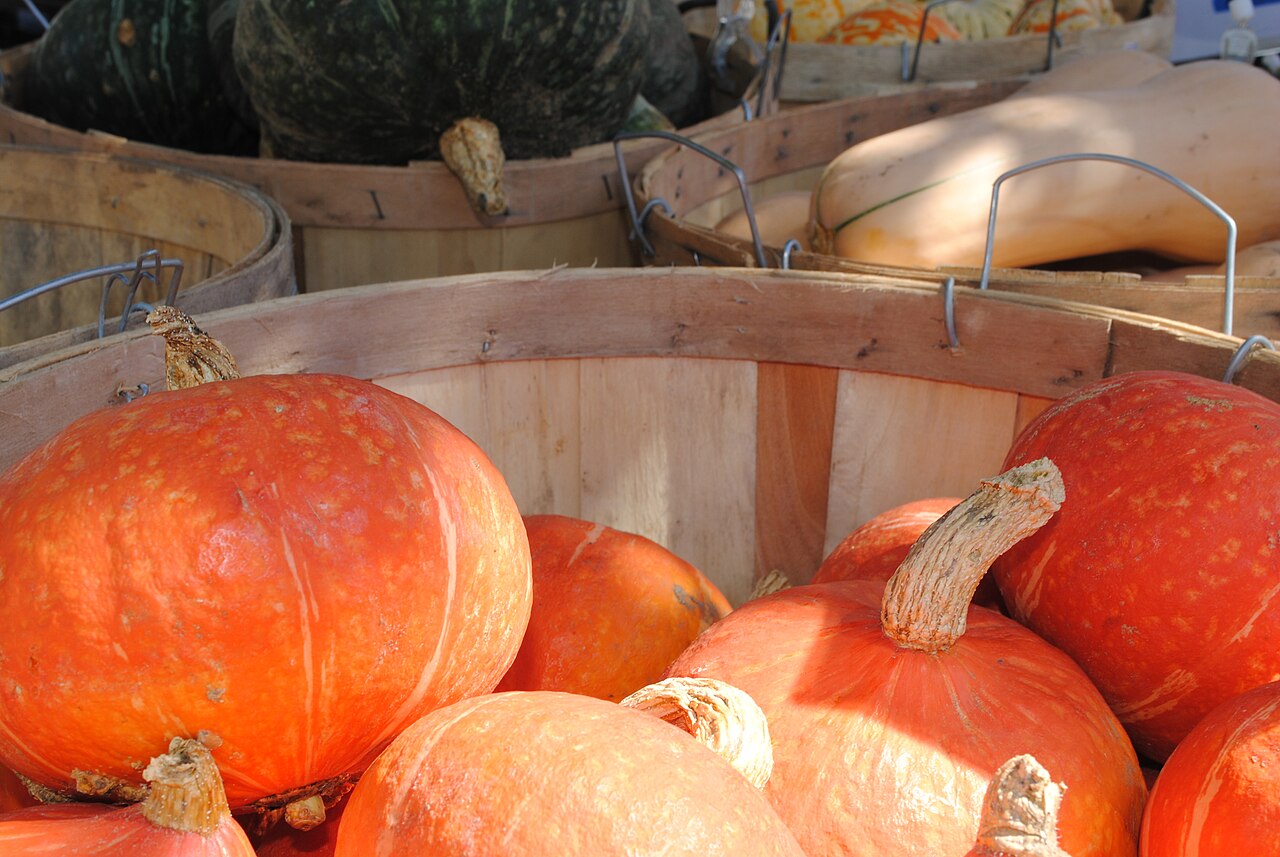
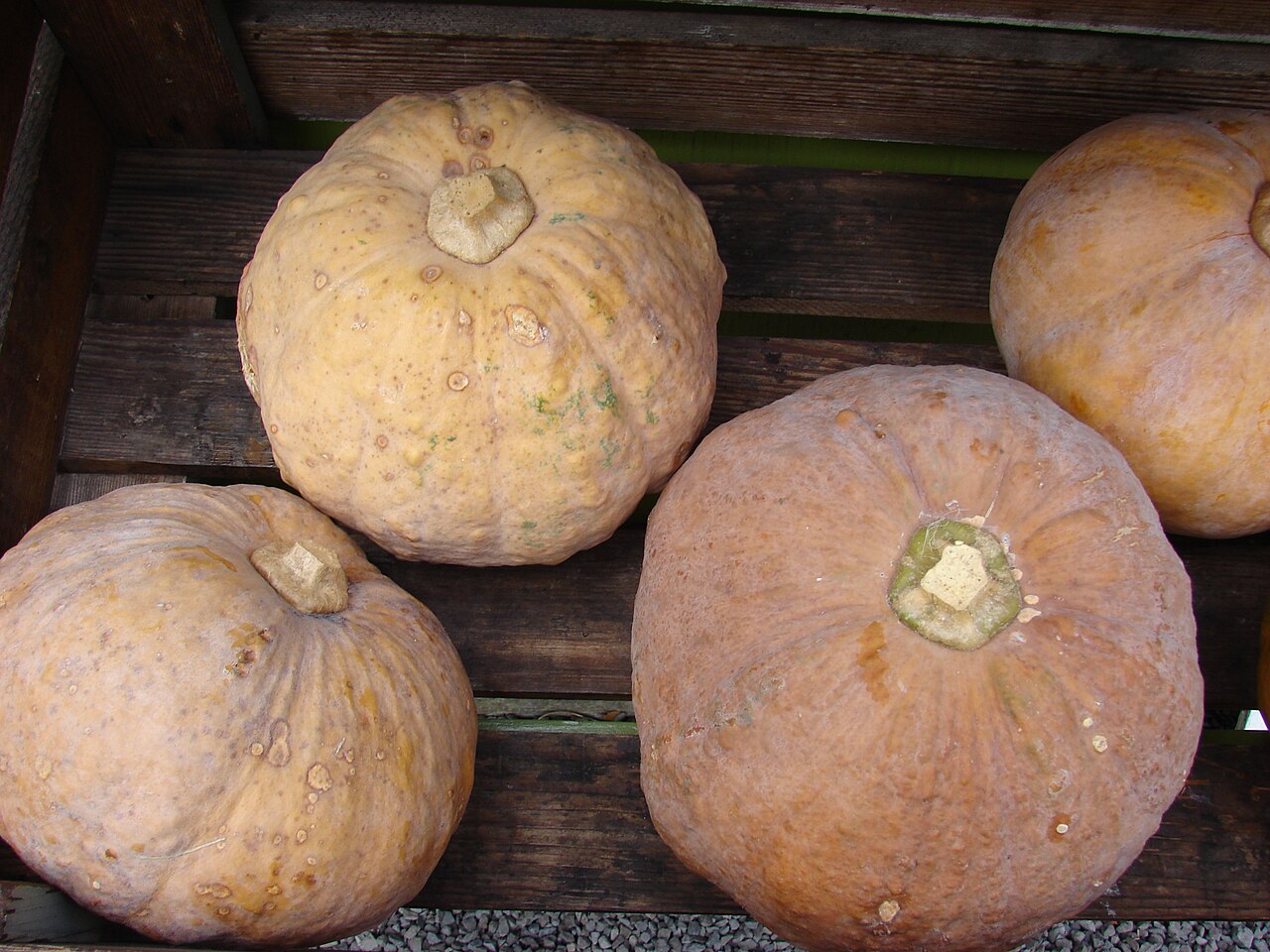
Kabocha is a type of winter squash, a Japanese variety of the species Cucurbita maxima, also known as kabocha squash or Japanese pumpkin in North America. It is hard on the outside with knobbly skin, often dark green, red-orange, or gray, and has an intense yellow-orange interior, shaped like a squat pumpkin. Kabocha is notable for its exceptionally sweet flavor, even sweeter than butternut squash, and is used in a variety of culinary applications across multiple cultures.
- species
- Cucurbita maxima
- also called
- Kabocha squash, Japanese pumpkin
- average weight
- 2–3 pounds (1–1.5 kg)
- peak season
- Late summer and early fall
- primary growing regions
- Japan, South Korea, Thailand, California, Florida, Hawaii, Southwestern Colorado, Mexico, Tasmania, Tonga, New Zealand, Chile, Jamaica, South Africa
- key nutrients
- Beta carotene, iron, vitamin C, potassium
Lore & Background
The Portuguese name Camboja abóbora was shortened by the Japanese to kabocha; alternatively, the Portuguese origin is the word cabaça for gourd. In Japan, kabocha may refer to this squash, the Western pumpkin, or other squashes. Many kabocha in the market are kuri kabocha, a type created from seiyo kabocha (buttercup squash). Varieties include Ajihei, Ebisu, Marron d'Or, and Miyako.
Reader's Guide
Kabocha is significant as a globally cultivated winter squash with deep roots in Japanese cuisine and history. Kabocha's exceptionally sweet flavor and edible rind make it versatile for roasting, steaming, soups, tempura, and desserts. It is primarily grown in Japan, South Korea, Thailand, and parts of the Americas and Oceania, with much of the California, Colorado, Tonga, and New Zealand crop exported to Japan. Ripening is crucial: freshly harvested kabocha is bland and must be matured in a warm place for 13 days, then stored cool for about a month to develop sweetness. This process transforms it into a smooth, sweet squash reaching peak ripeness 1.5–3 months after harvest. Kabocha's nutritional profile—rich in beta carotene, iron, vitamin C, and potassium—adds to its value.
Did You Know?
- The Japanese name 'kabocha' is derived from the Portuguese 'Camboja abóbora' or possibly 'cabaça'.
- Kabocha is richer in beta carotene than many other squashes and also provides iron, vitamin C, and potassium.
- Freshly harvested kabocha must be ripened for about 1.5–3 months to achieve its sweet flavor.
Origins & the Story Behind the Name
Kabocha's journey to Japan is a tale of maritime trade and linguistic adaptation. The Japanese shortened the Portuguese phrase Camboja abóbora into the familiar word kabocha, though some trace the name instead to the Portuguese word cabaça, meaning gourd. In kanji, the squash is written as 南瓜, which translates literally to "southern melon," and it occasionally goes by the name 南京瓜, or "Nanking melon." In Chinese culinary tradition, that same term covers a broader family of hard-skinned, meaty squashes, including what Westerners call pumpkins. The squash's deeper roots stretch back to Mesoamerica, where all squashes were first domesticated. Meanwhile, 21st-century archaeological and genetic work points to independent squash domestication by peoples in eastern North America, alongside sunflower and other native plants.
Flavor, Texture & the Kitchen
Kabocha occupies a distinctive niche in the squash world, offering a sweetness that surpasses even butternut squash. Its flesh delivers a complex taste that cooks often describe as a blend of pumpkin and sweet potato, with some specimens carrying notes of russet potato or chestnut. The exterior is a tough, knobbly shell in shades of dark green, red-orange, or gray, while the interior glows a vivid yellow-orange. A typical specimen weighs two to three pounds, though larger ones can reach eight. In the kitchen, kabocha is remarkably versatile. Halved and seeded, it can be roasted in wedges with oil and seasoning, or steamed under high pressure for fifteen to twenty minutes. An entire squash can be baked slowly in a convection oven until the whole thing, rind included, turns tender. In Japan it stars in vegetable tempura, soups, croquettes, and even pies, puddings, and ice cream. In Korea, the variety known as danhobak—literally "sweet pumpkin"—is the foundation of hobak-juk, a beloved pumpkin porridge. In Thailand, it appears in both traditional desserts and savory main courses, while in Jamaica it finds its way into chicken foot soup.
The Science of Post-Harvest Ripening
One of kabocha's most remarkable qualities is that it actually improves after harvest, a behavior that sets it apart from most fruits and vegetables. A freshly picked squash is still in a state of active growth and, frankly, bland. To unlock its full sweetness, a two-stage curing process is followed. First, the squash is placed in a warm environment of roughly 77 degrees Fahrenheit (25 °C) for thirteen days, during which a portion of its starch converts to sugar. Next, it is moved to a cooler space around 50 degrees Fahrenheit (10 °C) and left for approximately one month, a period that boosts its overall carbohydrate content. This transformation turns a dry, flat-tasting squash into one with smooth, richly sweet flesh. A fully ripened kabocha reveals itself through telltale signs: reddish-yellow interior flesh, a hard outer skin, and a dry, corky stem. Peak ripeness arrives roughly one and a half to three months after picking. Because of this post-harvest development, freshness at the point of sale matters far less than it does for most produce; what matters is that the squash has completed its maturation cycle.
Global Cultivation, Trade & Varieties
Kabocha thrives in a surprisingly wide range of climates, requiring only a growing season of at least one hundred days. Its primary growing regions span Japan, South Korea, Thailand, Mexico, Chile, Jamaica, South Africa, Tasmania, Tonga, and New Zealand, as well as parts of the United States including California, Florida, Hawaii, and Southwestern Colorado. A notable feature of the global supply chain is that much of the kabocha produced in California, Colorado, Tonga, and New Zealand is not consumed locally but exported to Japan, underscoring the squash's enduring significance in its adopted homeland. In Australian markets, the term "Japanese pumpkin" actually refers to a different winter squash altogether—the Kent pumpkin, a variety of Cucurbita moschata—highlighting how the name kabocha carries different meanings across regions. The squash most commonly found in Japanese markets is kuri kabocha, a type derived from seiyo kabocha, also known as buttercup squash.
Gallery
More in Edible Fruits & Vegetables 25-31
Elsewhere in the Edible Fruits & Vegetables universe
Spotted an error? Know more?
This is a living reference — every entry is fact-audited, and reader corrections feed straight into our audit queue. Suggest an edit · See this site's audit record