Cooking apple
Apples grown primarily for cooking, often tarter and larger.

Kolforn ( Kolforn ) I'd appreciate if you could mail me ([email protected]) if y · CC BY-SA 4.0
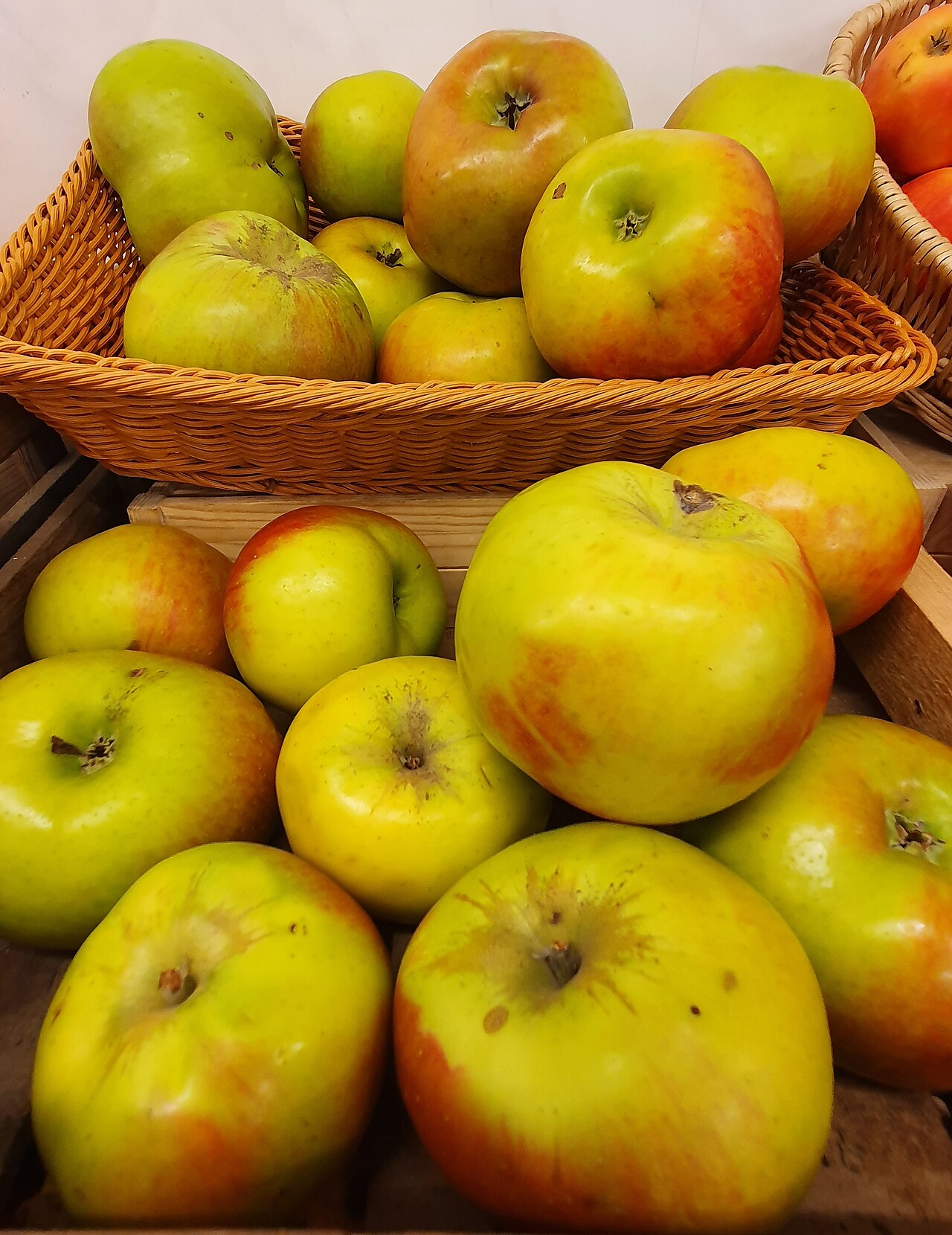
A cooking apple, also known as a culinary apple, is an apple used primarily for cooking rather than eating raw. Cooking apples are generally larger and tarter than dessert varieties, with some having firm flesh that does not break down much when cooked. Britain grows a large range of apples specifically for cooking, though worldwide dual-purpose varieties are more widely grown.
- definition
- Apple used primarily for cooking
- characteristics
- Generally larger and tarter than dessert apples
- culinary use
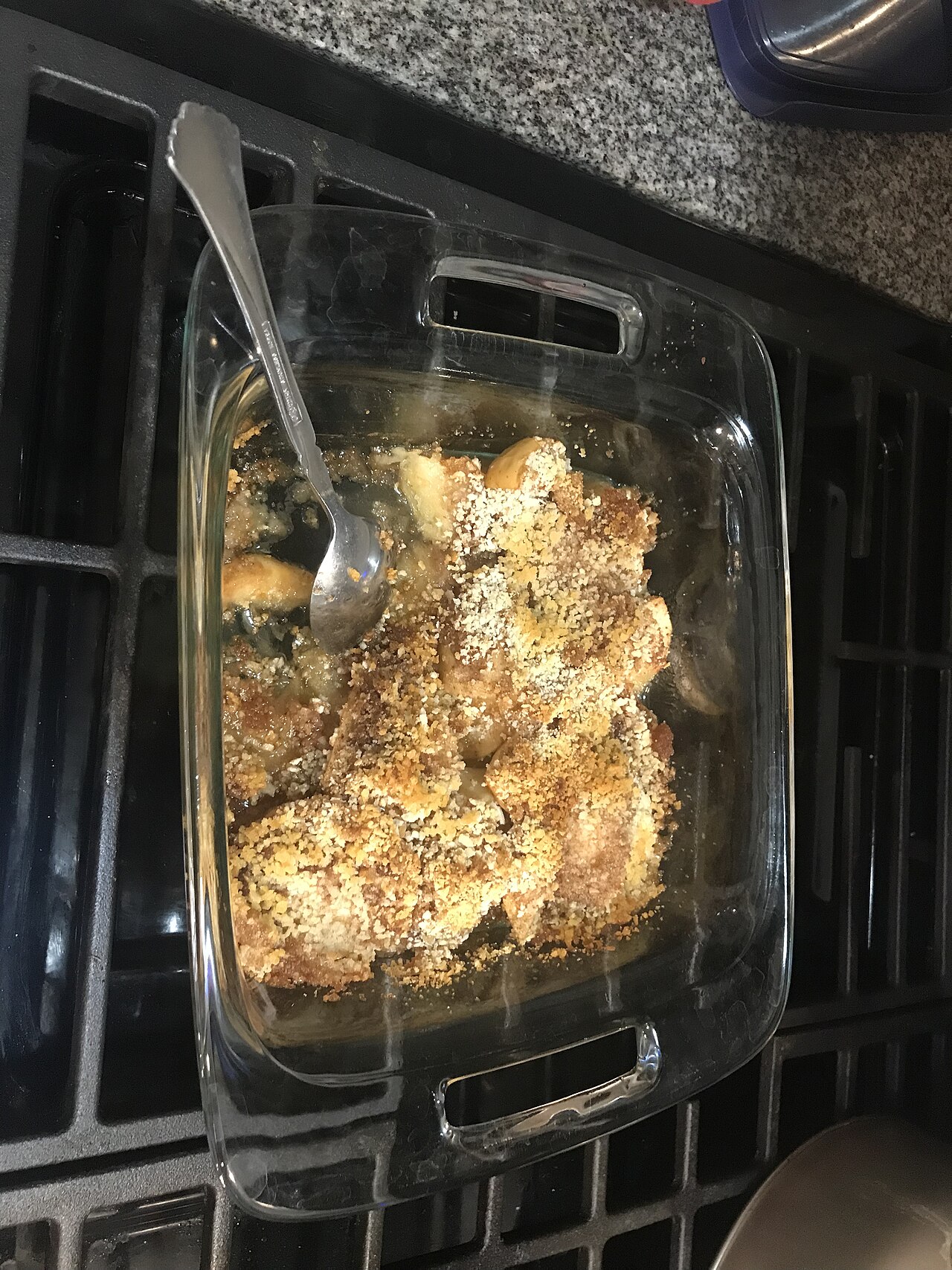
- Can be cooked into sauce, apple butter, fruit preserves, pies, crumble, baked apples, and apple dumplings
- testing method
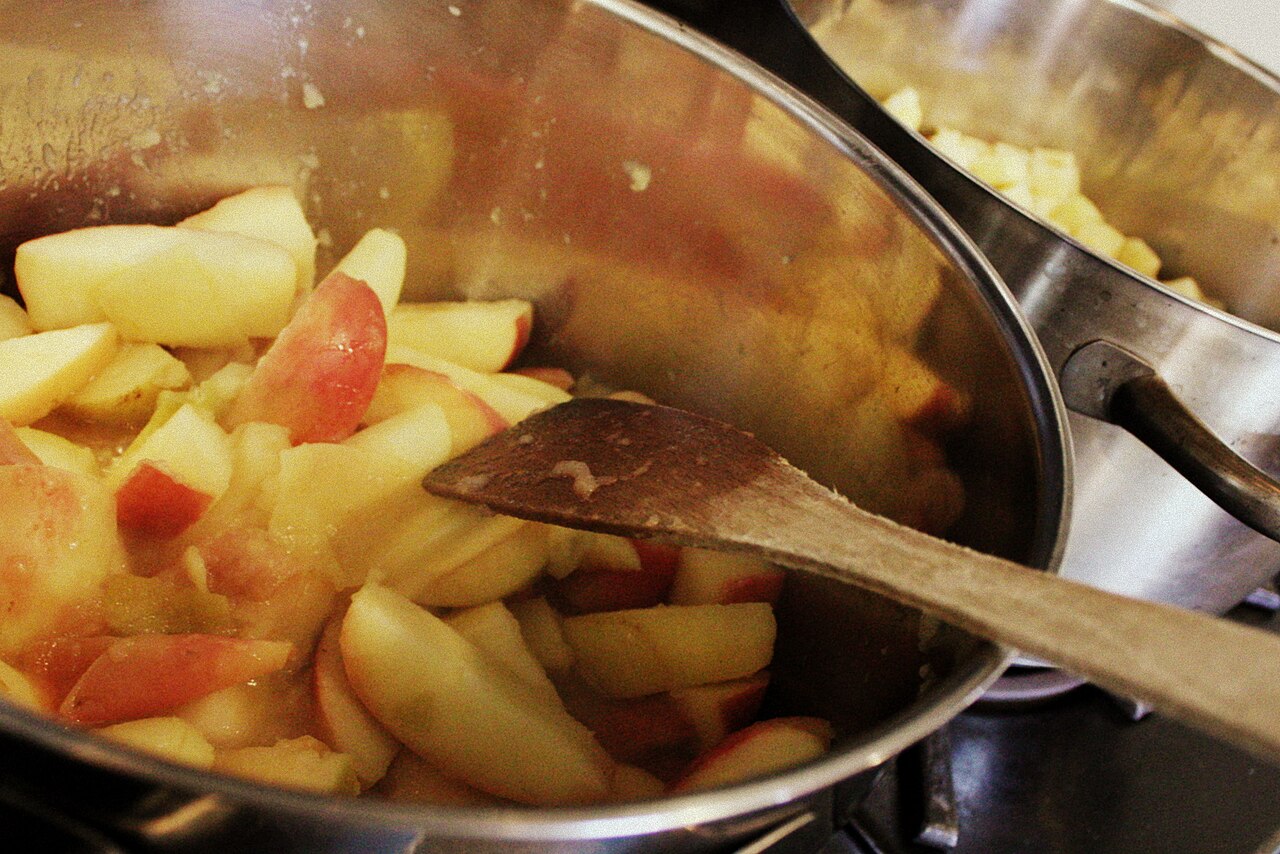
- Simmer a half-inch wedge in water until tender, then prod to see if shape is intact
- dual purpose
- Dual-purpose varieties (for cooking and eating raw) are more widely grown worldwide
Lore & Background
Cooking apples are distinguished from dessert apples by their tartness and firmness, though categories are suggestive rather than exact. Some varieties have a high acid content that produces froth when cooked, desirable for certain recipes. The performance of an apple when cooked is tested by simmering a half-inch wedge in water until tender, then prodding to see if its shape remains intact, and tasting to assess flavor and need for sugar. Some sorts fall when green, such as the Keswick, Carlisle, Hawthornden, and other codlins, while others fall only after being ripe, like the russet tribes. Those that fall when green are particularly valuable for early-season sauces. Cooking apples can be baked in an oven until soft, with the core removed and cavity stuffed with fruits, brown sugar, raisins, cinnamon, or liquor. Apple dumplings add a pastry crust. In the UK, roast pork is commonly served with cold apple sauce made from boiled and mashed apples.
Reader's Guide
Cooking apples have been cultivated for their firmness and tartness, making them essential for a variety of dishes including sauce, apple butter, fruit preserves, pies, and apple crumble. Their significance lies in their ability to hold shape or break down into puree depending on the variety, allowing for diverse culinary applications. The distinction between cooking and dessert apples is not absolute, as many dual-purpose varieties exist worldwide. In Britain, a large range of apples are grown specifically for cooking, reflecting a long tradition of culinary use. The testing method of simmering a wedge and checking its integrity remains a practical way to determine an apple's cooking behavior. Cooking apples thus represent a specialized category that has shaped both home cooking and commercial food production, with their tartness and texture providing the foundation for many classic dishes.
Did You Know?
- Cooking apples are generally larger and tarter than dessert apples.
- Some cooking apple varieties have a high acid content that produces froth when cooked.
- In the UK, roast pork is commonly served with cold apple sauce made from boiled and mashed apples.
The Accessory Fruit Distinction
The apple occupies a distinctive position in botanical taxonomy that sets it apart from many other commonly consumed produce. Rather than being a straightforward ripened ovary, the apple is classified as an accessory fruit, a category that also includes rose hips, strawberries, and pineapples. This designation arises because the apple develops from an inferior ovary, one positioned below the attachment point of the flower's other structural elements. As the fruit matures, floral components such as petals, sepals, and stamens do not simply shed away; instead, they fuse with the developing ovary and ripen alongside it, contributing tissue to the final edible structure. This means the flesh we associate with an apple is not solely the product of the ovary wall but incorporates material originally belonging to other parts of the flower. The underlying process still follows the standard sequence of double fertilization, where a pollen tube delivers two sperm cells into the megagametophyte, one uniting with the egg to form the zygote and the other creating the endosperm mother cell. Yet the structural outcome is unique: the apple's very form testifies to a more complex integration of floral parts than a simple fruit would exhibit.
Cultural Weight and Agricultural Presence
Among the vast array of edible produce that flowering plants generate, the apple has risen to occupy a particularly prominent cultural niche. Alongside the pomegranate, it is singled out as a fruit that has accumulated extensive symbolic and cultural meanings across human civilizations. This elevated status is not accidental; it is rooted in the apple's role within the broader agricultural landscape, where fruits collectively represent a substantial portion of the world's total agricultural output. The apple's sweet or sour flesh, edible in its raw state, places it squarely within the category of produce that humans and numerous other animals have come to rely upon as a dietary staple. This dependency is not one-directional. Over long periods, a symbiotic arrangement has developed: the plant gains a reliable mechanism for moving its seeds to new locations through the foraging and travel of animals, while those animals receive nourishment in return. The apple, with its accessible flesh and contained seeds, exemplifies this partnership, and its cultural symbolism likely grew out of this deep, practical entanglement between human sustenance and plant reproduction.
Symbiotic Partners in Seed Dispersal
The relationship between the apple and the creatures that consume it is best understood as a mutualistic arrangement refined over long stretches of time. Edible fruits, and the apple is a prime representative, have historically spread their seeds not through wind or water but through the locomotion of animals and humans. When a foraging animal bites into an apple, the seeds pass through its digestive tract and are deposited elsewhere, often far from the parent tree. The animal, meanwhile, gains caloric and nutritional value from the fleshy, sweet or tangy tissue surrounding those seeds. This is not a passive process; it is a symbiotic relationship in which one participant's need for seed dispersal is met by the other participant's need for food. Humans have become particularly significant vectors in this system, cultivating and transporting apples across regions and generations. The result is that the apple's agricultural dominance is inseparable from the movements of the very creatures that eat it, making the fruit's story inseparable from the story of its consumers.
A Word with Two Meanings
The term fruit carries fundamentally different connotations depending on whether one is speaking in a kitchen or in a laboratory. In everyday culinary language, a fruit refers to the sweet, tangy, or sour fleshy produce of a plant that is typically enjoyed raw; apples, bananas, grapes, lemons, oranges, and strawberries all fit this description. A nut, in this same culinary framework, is something hard, oily, and enclosed in a shell, while a vegetable is savory or non-sweet produce. Botanical classification, however, draws entirely different boundaries. In the scientific sense, a fruit is the ripened ovary or carpel of a flowering plant that encloses seeds, a definition that sweeps in tomatoes, cucumbers, pumpkins, corn kernels, and even wheat grains. Nuts, far from being a separate category, are actually a type of fruit in botanical terms, while what we call seeds are technically ripened ovules. The apple sits comfortably in both definitions, yet understanding its accessory-fruit status, where floral parts beyond the ovary contribute to its structure, reveals how much the culinary label conceals about the true botanical architecture of the fruit we eat.
Gallery
Frequently Asked Questions
What is a Cooking apple?
A Cooking apple is a variety of apple bred and selected primarily for use in the kitchen rather than for eating fresh. They tend to be bigger and noticeably tarter than the sweet dessert apples you'd grab for a snack.
How can I tell if an apple will hold its shape when cooked?
Simmer a small wedge (about half an inch) in water until it feels tender, then press it gently with a finger. If the wedge keeps its shape instead of crumbling apart, it's a solid candidate for pies, crumbles, and baked preparations.
What dishes can I actually make with Cooking apples?
They work well in apple sauce, apple butter, fruit preserves, pies, crumble, baked whole apples, and apple dumplings. Their firm, tart flesh is what keeps them from turning to mush during long cooking.
How do Cooking apples differ from regular dessert apples?
They are generally larger in size and carry a sharper, more acidic bite compared to the sweeter dessert varieties. Some also have a denser flesh structure that resists breaking down in heat, which is exactly what a baker wants.
More in Edible Fruits & Vegetables 1-24
Elsewhere in the Edible Fruits & Vegetables universe
Spotted an error? Know more?
This is a living reference — every entry is fact-audited, and reader corrections feed straight into our audit queue. Suggest an edit · See this site's audit record