Hass avocado
Hass avocado is the world's most consumed avocado variety.

MartinThoma · CC BY 3.0
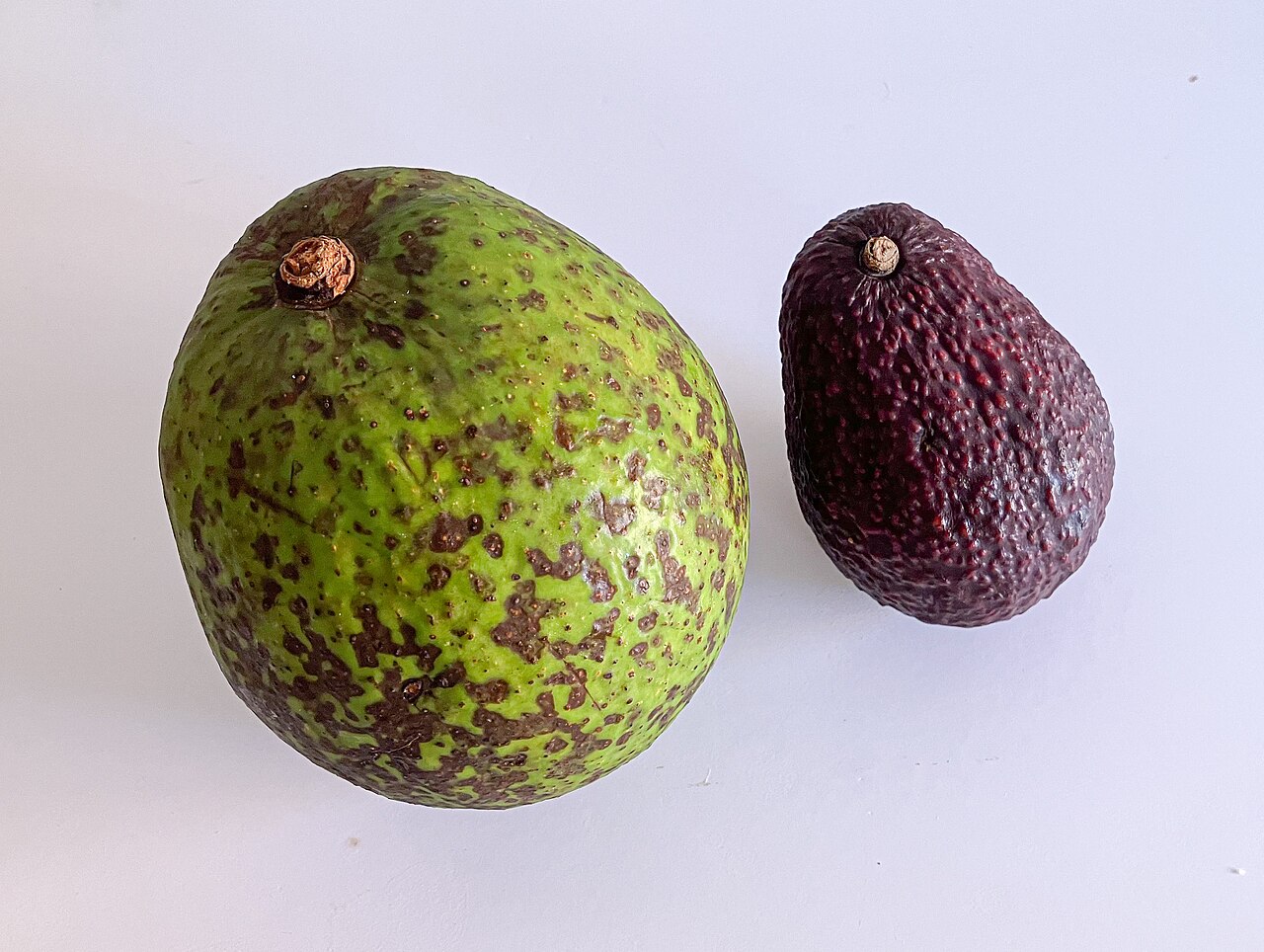
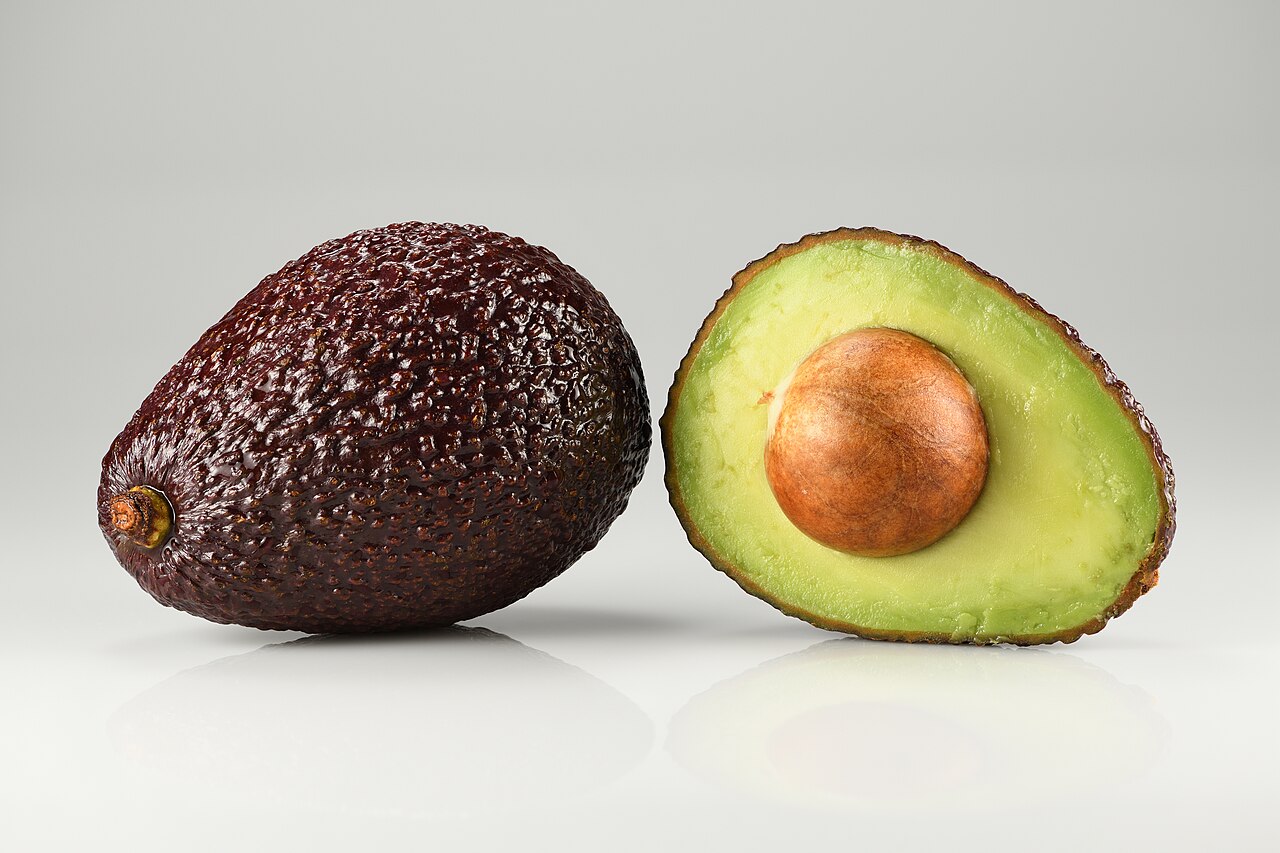
The Hass avocado is a variety of avocado with dark green, bumpy skin, first grown and sold by Southern California mail carrier and amateur horticulturist Rudolph Hass, who gave it his name. It is the most consumed avocado worldwide, accounting for more than 80% of the avocado crop in the United States and 95% of the California crop.
- field
- Horticulture
- known_for
- Developing the Hass avocado cultivar
- nationality
- American
Lore & Background
One seed yielded a strong seedling. After failing at least twice to graft it with branches from Fuerte avocado trees, a professional grafter named Caulkins advised him the tree was sound, so Hass let it be. The tree bore odd, bumpy fruit that his children liked, and Hass sold the surplus to co-workers at the post office. The Hass avocado had one of its first commercial successes at the Model Grocery Store on Colorado Street in Pasadena, California, where chefs bought the fruit for $1 each, a high price at the time.
Reader's Guide
The Hass avocado's significance stems from its commercial dominance, driven by its shelf-life, high growing yield, and year-round harvesting in some areas. Brokaw specialized in the Hass, often selling out because, unlike the Fuerte, Hass yields are year-round, more plentiful, with bigger fruit, longer shelf life, and richer flavor due to higher oil content. By the early 21st century, the US avocado industry took in over $1 billion a year from the Hass cultivar, which accounted for around 80% of all avocados grown worldwide.
Did You Know?
- The name 'Hass' rhymes with 'pass' and is sometimes confused with 'Haas' due to some supermarkets using that spelling.
Evolutionary Origins and the Megafauna Question
The avocado's evolutionary story stretches back millions of years. The genus Persea is believed to have originated in North America before diversifying across Central America during the Pleistocene epoch. Genome sequencing has revealed that polyploidy events played a significant role in shaping the species' evolution, and commercial varieties—including those bred for consistent, high-quality fruit—carry a hybrid origin. Some scientists, building on the concept of megafaunal dispersal syndrome, have suggested the avocado is an evolutionary anachronism: its large seed may have coevolved with now-extinct megafauna such as gomphotheres, ground sloths, and glyptodonts that once carried the seed across landscapes. Critics counter that non-megafaunal animals like agoutis and spectacled bears have been observed consuming avocados, complicating the picture. The earliest wild fruits likely bore seeds only about two centimeters in diameter, far smaller than the five-to-six-point-four-centimeter seeds found in today's cultivated berries.
Botanical Architecture: From Blossom to Berry
Persea americana is a substantial evergreen tree in the laurel family, reaching heights of nine to twenty meters with a trunk diameter of roughly thirty to sixty centimeters. Its leaves, eight to twenty-five centimeters long, are arranged alternately along the branches. Each year the tree produces thousands of small, inconspicuous blossoms—just five to ten millimeters wide—emerging from racemes near leaf axils. These flowers lack true petals; instead they display two whorls of three pale-green or greenish-yellow downy perianth lobes, along with nine stamens and two basal orange nectar glands. The fruit is botanically a single-seeded berry, not a drupe, with an imperceptible endocarp wrapping the large central seed. Ripe domestic varieties reveal smooth, buttery, golden-green flesh, while the skin ranges from green and brown to purplish or black depending on the cultivar. Shapes vary from pear to egg to sphere. Because the fruit is climacteric, it is harvested unripe and ripened post-harvest for commercial distribution.
Global Production and Environmental Pressures
The species' native range stretches from Mexico through Central America down to Peru, and archaeological evidence confirms human use of the fruit across these regions for thousands of years. Yet the industry carries significant externalities. In major growing areas such as Mexico and California, the water demands of avocado orchards place considerable strain on local water resources. Deforestation associated with expanding farmland and human rights concerns tied to organized crime's partial control of production in Mexico further complicate the picture. Looking ahead, global warming is projected to shift suitable growing zones substantially, while heat waves and drought will intensify pressures on existing production locales, threatening both yields and the communities that depend on them.
Linguistic Roots and Cultural Diffusion
The word avocado traces a fascinating linguistic path. It derives from the Spanish aguacate, which itself comes from the Nahuatl āhuacatl, ultimately reconstructible to the proto-Aztec form *pa:wa. A persistent popular myth claims the Nahuatl word originally meant testicle, but linguistic reconstruction shows the primary meaning was the fruit itself; the anatomical sense was likely a later euphemistic extension. In Nahuatl, the root compounds with other words—ahuacamolli, meaning avocado sauce, is the ancestor of the Spanish guacamole. Across the Americas, the fruit is known as aguacate in most Spanish-speaking regions, palta in Argentina, Chile, Peru, and Uruguay, and abacate in Portuguese.
Gallery
More in Edible Fruits & Vegetables 25-31
Elsewhere in the Edible Fruits & Vegetables universe
Spotted an error? Know more?
This is a living reference — every entry is fact-audited, and reader corrections feed straight into our audit queue. Suggest an edit · See this site's audit record